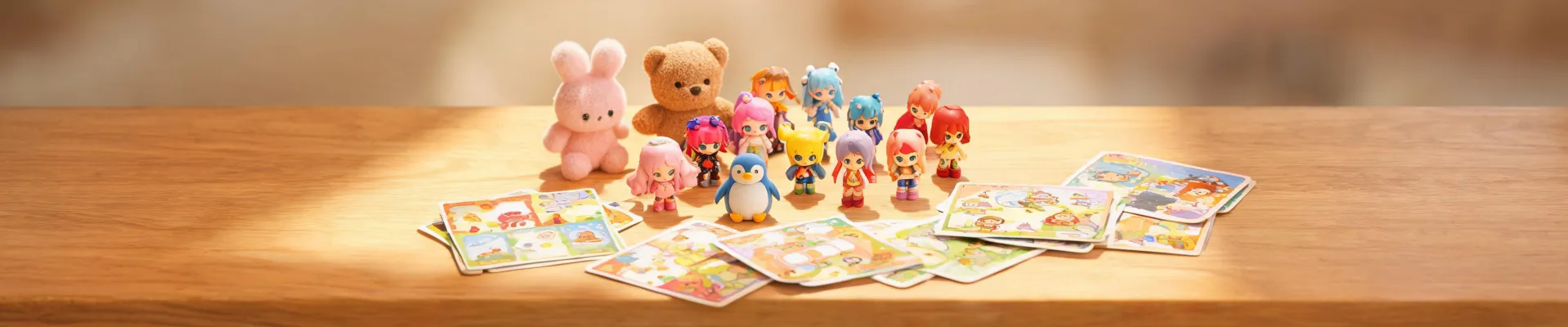
Here's my position on the Toy Story 30th anniversary Funko Pop: it can be worth your money, but only if you separate the anniversary sticker from the idea of scarcity. The badge itself tells you almost nothing about value. What tells you more is whether the figure completes a shelf that you already care about—and whether the total delivered price lands near Funko's official $65+ free-shipping line rather than on top of hype. Judge it that way and you have a fair chance of buying a memory without paying for a fantasy.
The 30th Anniversary Temptation: Are You Buying a Memory or a Price Spike?
So you spotted the Toy Story 30th anniversary Funko Pop, and now the voice in your head is already writing the checkout script. This is the moment where two separate purchases collide. One purchase is emotional: you want a piece of a milestone you grew up with, a figure that belongs on the shelf beside your old Buzz or Woody. The other purchase is speculative: you have read that anniversary items are special, that the supply might shrink, that a fair price today could look like a bargain next year. Those two impulses rarely produce the same decision. My claim is not that anniversary Pops are bad. It is that the anniversary part is the least useful signal in the whole decision. What matters is whether the figure suits a collection you can actually name—and whether the total cost stays close to Funko's own official threshold instead of floating on reseller excitement. That sounds simple, but most buyers let the sticker do the thinking.
I keep going back to how Funko describes itself, because it changes the frame. The company's own about page calls the brand a hub for pop culture and claims the world's largest selection of pop culture licenses. Read that closely when you are staring at a 30th anniversary listing. A hub does not ration joy; it distributes it across many fandoms. A license catalog that enormous means Woody, Buzz, and the rest of Andy's closet are not rare artifacts waiting for an anniversary moment. They are part of a routine cycle: new characters, new variants, new exclusives appear continuously, and the official store is built to keep that cycle moving. The anniversary label feels like a spotlight, but the evidence suggests it is more like one shelf in a very large warehouse. That is not a reason to skip the Pop. It is a reason to stop telling yourself the sticker represents a once-in-a-lifetime supply. When a company measures itself by the breadth of its catalog, an anniversary figure is usually a callback rather than a cap.
So where does that leave a buyer who still feels the tug of the milestone? Let me reframe the question: are you trying to honor a memory, or are you trying to beat a market? Both are legitimate, but they have different rules and different finishes. The rest of this article walks through the trap that follows the anniversary sticker, then builds a simple comparison using signals Funko itself publishes—catalog scale, product breadth, and shipping thresholds. By the end you will have a decision rule that works for a 30th anniversary Pop today and for the next nostalgic reissue next year. The goal is not to talk you out of the purchase. It is to make sure that if you hand over money, you do it because the figure fits your shelf and the price is defensible, not because a badge briefly made you feel like a collector in a hurry.
The Trap: Reading a 30th Sticker as a Scarce Signal
The most predictable failure starts with a feeling: you see '30th anniversary' on the listing, and the phrase does the work that research should do. You assume the edition is limited, the supply is deliberate, and the aftermarket price is a fair measure of future value. None of those follow. Preorder windows and retail drops routinely reappear, and collectors who convinced themselves that a commemorative sticker meant scarcity are the ones who later watch the same figure sit in stock at a lower price. The second failure pattern is subtler. You may know the anniversary badge is not a real scarcity signal, but you still compare every asking price against the highest number you saw on a resale site rather than against the official store. That invites a weird bias: a Pop can feel cheap when it is merely less overpriced than the other listings. Both mistakes share one root. The buyer is reading the market as if the anniversary created a fixed, limited supply, when the official evidence points to a company that is constantly refreshing and adding to a massive catalog.
How can you tell before you buy that you are falling into one of these patterns? Ask yourself a set of questions that have nothing to do with the sticker. Would you still want this exact figure if the anniversary branding were removed from the box? Would you buy it at the same price six months from now, after the milestone fades from the homepage? Is your excitement about the character, or about the idea that the item is rarer than it actually is? The honest answers are uncomfortable. Most impulse purchases fail the second question: without the anniversary rush, the urgency disappears. If you catch yourself searching for reasons the price is justified, that is not research; that is rationalization. A reliable check is to write down the total you are about to pay and compare it with what you would happily spend on a regular Pop that you genuinely love. When the anniversary markup feels defensive rather than deliberate, you have your answer.
Compare the Official Catalog, Not the Hype
After those false signals, turn to the official catalog, because it gives you two anchors that resale conversations usually ignore. The first appears at the top of Funko's official store: free shipping on orders of $65+. That threshold is not a marketing trick; it is a workable baseline for judging any listed price. If you are weighing a 30th anniversary figure, compare its total delivered cost with what your cart would cost if you bought the same piece at retail and added another item you actually wanted to cross that $65+ line. The second anchor is category breadth. Funko does not live only in Pop! vinyl. The same official pages describe Loungefly for apparel and accessories, Mondo for music and poster art, and Digital Pop! for collectibles through the Droppp platform. That breadth matters because it shows how Funko treats a nostalgic franchise: as a source of many products across many lines, not as one commemorative release to be auctioned forever. Place the anniversary figure into that context and it becomes one SKU inside a very wide assortment. That reframing is exactly what keeps a buyer from turning a fine keepsake into a panic purchase.
Once you have those anchors, the comparison becomes practical. Pull up the listing that made your heart beat faster and ask whether its price beats the total you would pay through official channels once free shipping is factored in. If it does, the listing may genuinely be fair. If it does not, you are paying a premium for convenience or urgency, and you should be able to name what that premium buys: a store exclusive that may not restock? A wait-time saving that matters for a gift? Or simply the anniversary label doing the pricing for you? Most secondhand listings will not survive that test. The ones that do are usually tied to a specific variant or to a scarcity pattern you can verify in the official catalog. The question is not whether the figure will someday be worth more. The question is whether the number you are paying right now makes sense when you know the catalog is wide, the releases keep coming, and the official threshold gives you a straightforward baseline.
Decision Rule: What Turns a Pop into a Keep?
Now the decision rule narrows to your own shelf. Imagine you already keep a Toy Story corner: a few Woody figures, a Buzz or two, maybe a Jessie or a Bo Peep from another line. In that context a 30th anniversary Pop is not a random purchase; it is a missing year in a story you have told across many purchases. The condition is simple: buy when the figure completes a theme that already exists in your collection. The word existing is important. If you buy the anniversary Pop first and imagine it will become the seed of a Toy Story collection tomorrow, you are probably buying a plan, not a product. Collection intent should precede the purchase, not ride in with the shipping box. The same rule protects you through price swings. A figure that belongs to a deliberate shelf can absorb some resale drop without making you feel cheated, because its value is partly curatorial. A figure bought only because it carried an anniversary badge has no such protection.
Here is the justification loop that closes the rule. Funko's official positioning returns, now with the substructure visible: the same brand pages describe Funko as a hub with the world's largest selection of pop culture licenses, and they show that the company fuels Loungefly, Mondo, and Digital Pop! alongside its core figures. I return to that point because it is the antidote to the scarcity narrative. If the company routinely serves nostalgia across apparel, poster art, and digital collectibles, then an anniversary item in any one line is not the final word on that franchise. The rule to hold onto is therefore: buy when collection intent is real and the total shipped price is close to the official $65+ free-shipping anchor; resist when the main driver is fear that the piece will disappear. That rule works today, and it will survive the next wave of Funko news because the catalog is built to refresh. You are not making a bet against supply. You are making a deliberate choice about a piece that earns its place on your shelf.
Verdict: Your Answer to the Opening Question
Before you click anything, I want to apply one final filter, and it is not centered on rarity. Hold the figure in your mind and imagine it on the shelf six months from now. Does it still look like a deliberate part of your Toy Story or Pixar collection, or does it look like a souvenir of a moment of excitement? Pair that with the price you calculated. If the total sits near the official free-shipping anchor and the item genuinely belongs to a theme you collect, the purchase has passed the test; the anniversary sticker is simply the occasion that brought you to it. If the total is well above that anchor and the only justification is the word anniversary, the purchase is likely to age badly. That final check does not ask you to deny the emotional pull. It asks you to make the emotion and the price point arrive at the same decision.
So, is the Toy Story 30th anniversary Funko Pop worth buying? Yes, but only under the conditions that match what Funko's own pages reveal. The company frames itself as a hub of pop culture with a huge licensed catalog, and its homepage is a living feed of new releases, preorders, exclusives, and fan rewards rather than a shrine to one nostalgic moment. Keep that image in mind when a listing uses the anniversary sticker to sell you scarcity. The 30th edition can absolutely be worth it, but it earns the purchase through your collection theme and a price near the official threshold, not through the badge on the box. Buy it as a piece of your own Toy Story shelf, at a number you can defend, and the memory stays honest. Buy it because you are afraid a 30th anniversary label means a once-in-a-lifetime chance, and you are buying the fear. My answer is to be the first kind of buyer. That is the only way the milestone keeps its glow after the hype has moved on.
Buy the figure when it completes your Toy Story or Pixar shelf and the total delivered price sits close to Funko's official $65+ free-shipping anchor. Skip it when the only real argument is the anniversary sticker. That is how a 30th anniversary Pop becomes a memory you keep rather than a price spike you regret.

Jane Smith
I’m Jane Smith, a senior content writer with over 15 years of experience in the packaging and printing industry. I specialize in writing about the latest trends, technologies, and best practices in packaging design, sustainability, and printing techniques. My goal is to help businesses understand complex printing processes and design solutions that enhance both product packaging and brand visibility.