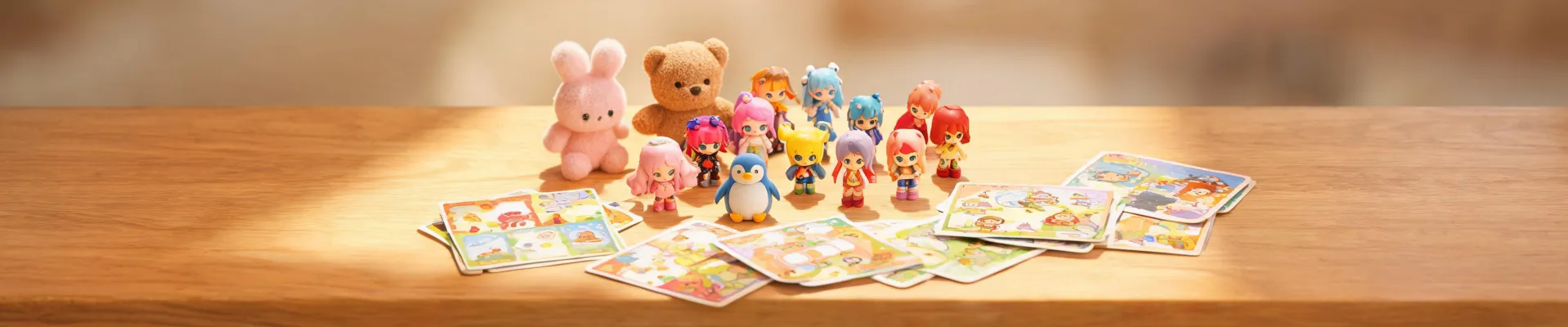
The holiday list is open, and two Hagrids stare back from the Funko store. One is the familiar Pop! vinyl — oversized head, tiny body, a silhouette built for a shelf. The other is a soft plush, rounded, clearly made to be squeezed. Same half-giant, same holiday spirit, but they are not the same purchase. The online cart will not care which one you choose, but the wrapping paper will. This is the dilemma: you want a single Hagrid that looks impressive on a shelf and still offers the softness of a plush, and no box contains both. Which priority wins — the one that displays, or the one that gets hugged?
The Holiday Hagrid Choice: Pop! or Plush?
The tension is real, because the two formats belong to different product categories with different design goals. Treating the plush as a cheaper, lower-quality version of the Pop! is the mistake most holiday shoppers make — it isn't. Funko built the vinyl figure for display and the plush for handling, and each one fails at the other's job. The vinyl looks striking on a shelf but feels cold in a child's hands and chips if dropped. The plush warms a sofa nicely, but its soft body will not hold a pose for a glass case. No single purchase covers both needs, and that fact forces the decision in practice: what is this gift going to live with — a shelf or a pair of arms? Answer that first, and the 'better Hagrid' question dissolves for good.
This is not a brand quietly demoting one format to budget status. Funko's catalog treats vinyl figures and plush as parallel lines in the same collectible family. Its store pages list 'collectible figures, apparel, accessories, plush, action figures, digital collectibles, and more,' and the company claims the world's largest selection of pop culture licenses. The meaning: either Hagrid is authentic Funko, and the difference is functional, not a quality grade. The plush is not the discount version of the Pop!; it is the alternative design brief. That distinction matters when you compare price tags, because you compare two different jobs, not two tiers of one object. Neither scale outranks the other.
Before price comparisons, freeze the scene where the gift will live. Picture the recipient's room: a shelf where a figure can stand in its box, or a bed, a couch, a car seat? If the former, the vinyl has a job to do. If the latter, the plush's soft body earns its keep. Ask the same about your own Hagrid. A display wall asks for visual consistency; a reading corner asks for something that can be hugged without worry. Both are legitimate, so the choice feels hard: it is about matching the object to the room, not about which object is better.
Design Face-Off: Vinyl Silhouette vs. Soft Companion
Now consider the design language of each format. Funko's catalog groups vinyl and plush under one pop-culture umbrella, yet the two are built for opposite experiences. The umbrella matters less than what each does differently. The vinyl Pop! is a stylized statue: a compact figure with an oversized head and minimal detail, designed to read clearly from three feet away on a shelf. The plush is engineered for the hands — fabric that compresses, features that stay soft, a shape that invites squeezing. The same character, same license, but two completely different design goals: one optimizes for the eye, the other for the touch.
Look closer, and the trade-offs sharpen. The Pop! carries that signature oversized head and small body, a few inches tall with a fixed pose, and arrives in a window box collectors treat as artwork. The plush is the opposite — rounded, textured, stitched, soft enough to compress. One format can be posed on a desk, dusted, and returned to its box; the other can be carried to the couch, washed after snack residue, and left in a pile of pillows. Neither specification is a flaw; each is a requirement. The problem appears only when you expect one format to do the other's job — which is how a straightforward gift turns into a disappointment.
For someone who already collects Funko, the preference usually tilts toward the vinyl. A collector cares about line consistency, box condition, and the visual rhythm of a shelf full of matching silhouettes; a plush sitting among them breaks that rhythm, no matter how well-made. On the other side, a fan who has never bought a Funko won't register collectibility — they will register softness, weight, and whether it's much fun to hold. That asymmetry explains most of the debate: neither is better; the two formats appeal to two different sets of values, and a collector's values are weighted toward the display case.
Under the Engineering Lens: Material, Size and Display
Put on the engineer's lens: materials decide more than appearance. Funko's storefront calls itself the 'Home of Pop! Vinyl,' anchoring vinyl as the flagship format — rigid enough to hold a pose but with real limits. Drop it on a hard floor and you may chip a head or crack a base; the damage is permanent. The plush trades rigidity for forgiveness: soft exterior and flexible fill absorb impacts and bounce back. Maintenance math follows material. Vinyl needs a stable shelf and gentle handling; plush survives squeezing, tossing, and — depending on the care tag — a gentle wash. For a household hard on belongings, material is the whole argument.
Display footprint is the second engineering consideration. A Pop! arrives in a rectangular window box, a few inches tall, designed to sit upright among its neighbors; the footprint is compact, consistent, stackable. A plush has no such fixed geometry — irregular, soft, unable to stand at attention; it slouches, looking quite casual at best and messy at worst. The practical takeaway: if the Hagrid is destined for a shelf that runs on Funko's uniform sizing, the vinyl fits the system. If the destination is a bed or a playroom corner, the plush's lack of structure becomes comfort, not a drawback.
Maintenance and replacement complete the picture. Vinyl is easy to keep clean — a dry cloth handles dust — but it is fragile. A cracked base or bent accessory is rarely repairable; demand can push aftermarket prices above retail, so replacing a damaged Holiday Hagrid may cost more than the first did. The plush is the opposite: it collects dust and pet hair, needs spot cleaning, and shows wear over months of hugging. When it finally wears out, replacement costs less, and nobody agonizes over resale value. The calculus: the plush is cheaper to maintain; the vinyl is the one you protect more.
Value Check: Price, Rarity and the $65+ Threshold
Value means more than sticker price; the aftermarkets diverge. Funko's storefront is built around scarcity and completion — it promotes limited-time exclusives and two-packs like the exclusive Pop! 2-Pack of Shane Hollander and Ilya Rozanov, all framed by the mantra to 'collect them all to complete your set.' That machinery drives the vinyl line, so a Pop! can appreciate after leaving the shelf. The plush participates in none of that economy; its market is use, not scarcity. So the honest answer to 'which format holds value?' is: the one the collector market actually trades.
On price, the formats sit in different ranges. A standard Pop! lands in the $12–$15 bracket, while a comparable plush typically runs $20–$30 — so the softer option often costs more upfront, surprising shoppers who assume plush is the budget tier. That assumption collapses: these are different categories with different materials. Funko's store adds a useful wrinkle: orders of $65 or more ship free. For holiday shoppers, that threshold turns the dilemma into a bundling decision — add a plush for the child and a Pop! for the adult collector, and the combined order clears $65 while solving two gift slots at once.
Budget discipline then narrows the field. If you can buy one item, the $12–$15 Pop! is the lower-risk purchase for an adult-focused list: it satisfies the collector urge and leaves room for other gifts. If the list leans toward children, the $20–$30 plush is the more effective spend: a plush used daily delivers more value per dollar than a figure that sits untouched. If the budget can stretch, the $65 free-shipping threshold rewards buying both — the shipping savings offset part of the cost, and you cover shelf and sofa. The mistake is choosing by dollar amount without asking what each format will do in the recipient's life.
Gift-Giving Scenarios: Who Gets Which Hagrid?
Now translate the comparison into gift scenarios, because age and lifestyle settle most of the debate. For a child, the plush can be carried through a holiday trip, hugged during a movie, and slept with; the vinyl offers none of that and will disappoint a child who wants to play. For a teenager or adult who already collects, the Pop! is the safer emotional hit — it fits the collection, looks right on the shelf, and signals that the giver understands their hobby. The plush there feels like a cute extra, not the main event. Neither recipient is 'right'; the same two products point to different recipients, which is why any guide that declares a single winner is oversimplifying.
Use case matters beyond age. Consider how the person lives with fandom: do they display it openly on shelves and desks, or keep favorites close on the couch and bed? Does the recipient keep a box pristine, or rip packaging and squeeze everything? A film fan who has never collected vinyl will likely value the plush's warmth over the Pop!'s collectibility, even as an adult. A completionist who owns several Hagrid figures will want the vinyl to maintain the pattern. If the gift is for a household with both, the answer can be both — which brings you back to the $65 shipping threshold and the bundling solution it rewards.
The Verdict: Choose Your Hagrid With Eyes Open
The verdict, stated plainly: the Holiday Hagrid Pop! is the sharper display piece for serious collectors, and the plush is the warmer, more practical pick for gifting, cuddling, and everyday use. Neither is 'better'; the choice hinges on where the gift will live, not on which impresses more in a photo. If the destination is a shelf, vinyl wins on visual consistency, collector value, and aftermarket safety. If it's a pair of arms, plush wins on softness, daily durability, and replacement cost. That's the whole decision, as long as you resist treating the two formats as the same toy in different materials. They are not.
Two boundary conditions can flip the answer, state them before you buy. First, recipient age: for children under ten, the plush outlasts the Pop! in use and costs less to replace when beat up; the vinyl is right for collectors who understand a display piece. Second, display commitment: without a dedicated shelf or cabinet, the Pop!'s advantages evaporate — in a drawer, it's fragile clutter. The plush has no such requirement; it can live anywhere a pillow can. When either condition points away from your first instinct, trust the condition. The holiday gifting graveyard is full of vinyl figures bought for people who hug.
Here's the final recommendation. For the adult collector on your list — or for your own display wall — put the Holiday Hagrid Pop! in the cart and protect that box. For the child, the comfort-seeker, or anyone who will handle the gift, hand over the plush and skip resale worry. For a household with both, use Funko's $65 free-shipping threshold to bundle the pair, and let shelf and sofa get their own Hagrid. The test before checkout is simple: picture the gift one month after the holidays. Is it standing on a shelf, or being squeezed on a couch? Wherever you saw it, that is the format you should buy.
The verdict, with no hedging: the Pop! for the shelf, the plush for the arms — and the right Hagrid is the one that matches the room it will live in. The room decides, and the dilemma is already solved.

Jane Smith
I’m Jane Smith, a senior content writer with over 15 years of experience in the packaging and printing industry. I specialize in writing about the latest trends, technologies, and best practices in packaging design, sustainability, and printing techniques. My goal is to help businesses understand complex printing processes and design solutions that enhance both product packaging and brand visibility.