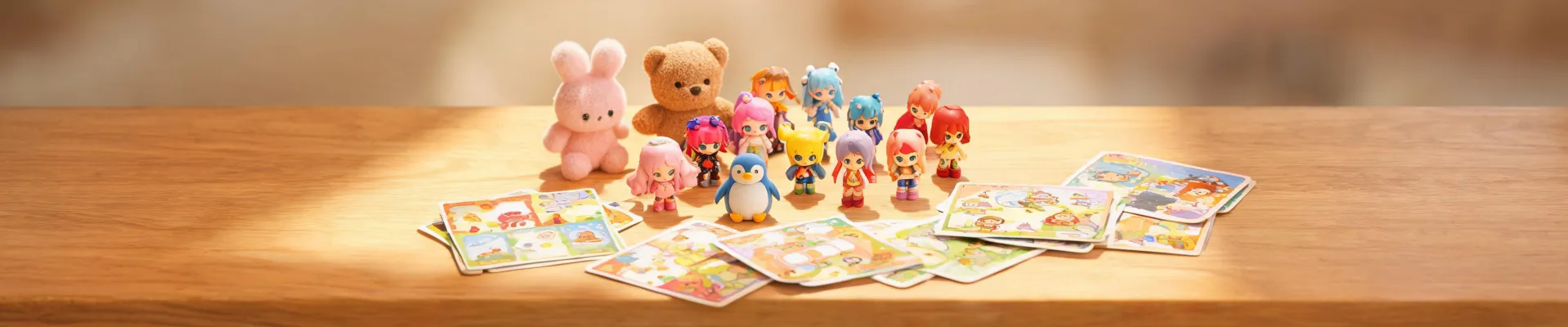
The Toy Story 30th Anniversary Funko Pop is not a smart investment—and that's exactly why it might be worth buying. It's for collectors who want a daily reminder of childhood, not for flippers.
Thirty Years Later, This Pop Is Still Dividing Collectors
The Toy Story 30th Anniversary Funko Pop is not a smart investment—and that's exactly why it might be worth buying. The moment you treat this vinyl figure as a financial vehicle, you misread its entire category. Funko sells pop-culture nostalgia, not scarcity; the anniversary label is a marketing beat, not a guarantee of a finite run. If your first thought is 'sell it later for profit,' you're already on the wrong shelf. If your first thought is 'I want to see Woody and Buzz on my desk every day,' then the price tag starts to look like rent for a small piece of childhood. Let me be direct: I'm not here to talk you out of it, and I'm not here to cheerlead it. I'm here to separate the actual function of this collectible from the noise around its release, because the two have almost nothing in common. The sooner you accept that, the better your decision will be.
This anniversary release doesn't exist in a vacuum. Look at how Funko frames its own business: the official site calls itself a hub for pop culture, promising to 'bring more fun into your everyday' across figures, apparel, accessories, plush, and digital collectibles. That positioning matters because it tells you what the 30th anniversary Pop actually is—one node in a continuously updated catalog, not a museum piece. The same page advertises free shipping on orders above $65, which is the language of a mass retailer, not an auction house. When the company itself emphasizes volume, variety, and everyday fun, it's a signal that the anniversary piece is designed to sit on a shelf and be enjoyed, not to sit in a sealed box and appreciate. The evidence doesn't say 'buy this for ROI'; it says 'this is a tribute for fans, and we make a lot of them.' That manufactured abundance is exactly why a price spike on the secondary market is a fluke, not a trend.
Brand Power Alone Doesn't Make a Pop a Good Buy
So what makes this 30th anniversary set different from the other Toy Story Pops you've seen? Honestly, very little—and that's the point. The design is a tribute, likely the classic crew posed in a way that echoes the original film's poster or a key scene. But the mold, the paint, the box size—all follow the same factory standards as every other Funko release. The 'special' part is the sticker and the anniversary framing, not the manufacturing. If you strip away the label, you're left with a vinyl figure of a beloved character, which is exactly what the line has always produced. The question isn't whether it's unique; it's whether that label earns a place in your personal collection. And that's the real test—not the box, not the sticker, but your own reaction when you hold it. Most people skip this step and end up with a dusty box in a closet, bought on impulse and forgotten by the next wave.
Here's the condition that most buyers skip: a strong brand is necessary for a collectible to hold emotional value, but it's not sufficient to make it a good buy. Funko's scale is real—the homepage is a rotating carousel of new products, from WWE exclusives to BLEACH anniversary figures to personalized wedding Pops. That confirms the company has the muscle to produce and push dozens of franchises at once. But that same muscle means your 30th anniversary Woody is one of hundreds of SKUs shipping this quarter. The brand doesn't make the piece rare; it makes it reliable. Reliability matters if you care about build quality, authenticity, and resale liquidity—but liquidity is not the same as profit. In other words, the brand backstop explains why you can find a buyer if you ever sell, but it doesn't explain why you should buy in the first place. The same homepage pushes fan rewards, pre-order windows, and new exclusives every week, which is exactly the engine that keeps the catalog moving and keeps any single anniversary piece from sitting still long enough to become an investment-grade asset.
Two Kinds of Buyers, Only One Should Hit Checkout
The difference between the two buyers shows up in the evidence itself. Funko's own copy tells you what the product is for: 'Find your fandom' and 'bring more fun into your everyday.' That's the language of emotional connection, not asset allocation. A nostalgia-driven collector reads that and says, yes, this is the Woody I grew up with, and I want him here. An investor reads the same line and looks past it to distribution numbers, variant count, and resale trends. The brand gives both people the same product, but the two are buying different things. For one, the value is realized the moment the box is opened and placed in a visible spot. For the other, the value only exists if someone else pays more later. The evidence doesn't tell you which camp you're in—that's a self-assessment. But it does tell you which camp the product was designed to serve. And that distinction is the difference between a decoration and a gamble.
So which one are you? Be honest, because the binary answer changes everything downstream. If you can look at this Pop and recall the summer you watched Buzz fall from the stairs, or the way your kids now watch the same movie, you're in the first group. If you're checking eBay sold listings before you've even decided, you're in the second. There's no shame in either, but mixing them up creates the worst outcome: paying a nostalgic premium while expecting investment returns, then feeling both broke and disappointed. Ask yourself one question: if the value never rose another cent, would you still want the figure on your shelf? If yes, you're a collector. If no, you're a speculator, and this isn't the asset for you. This isn't a trick question; it's the only question that matters, because it filters out the noise of release dates and price tags and leaves you with the actual reason you're reaching for your wallet.
Then let that answer set the condition for purchase. Nostalgia-driven? Go ahead and buy—but buy with rules. Set a budget, check that you have the shelf space, and pick the version that actually sparks the memory, not the one the algorithm tells you is 'hot.' Investment-driven? Step back. A mass-produced anniversary figure from a company that constantly restocks and releases new lines is a poor vehicle for speculation; the only way it pays off is if a specific variant becomes a pop-culture artifact on its own, and that's a lottery, not a plan. The condition is asymmetric: a collector's loss is a few dollars and some dust; a speculator's loss is the opportunity cost of tying money to a static object. If you're in the second group, the rational move is to skip or limit yourself to a single box for the memory, and put your capital somewhere designed to grow. The fun version is buying it with both eyes open, accepting that the price is for the feeling, not for the future. If that's your basis, the math changes—and the purchase becomes defensible.
Three Mistakes to Avoid Before You Spend a Dollar
Even if you've decided you're a collector, the buying process is where most people stumble. First mistake: assuming 'anniversary' equals 'limited.' Funko celebrates anniversaries all the time—it's a recurring marketing pattern, and many of those pieces remain available or get reissued. The word 'anniversary' is a celebration of a milestone, not a promise of scarcity. Second mistake: ignoring physical space. A 10-inch Pop or a 2-pack might look great in a digital cart, but if your apartment has one narrow shelf, that figure becomes clutter, not tribute. Third mistake: trusting hype over your own eyes. If a dozen social posts say 'must-have,' but the design doesn't move you, it won't move you after it arrives. The common thread is that all three mistakes replace your judgment with external signals. The fix isn't to avoid the product; it's to slow down and inspect your own reaction before you check out.
Once you've decided to buy, the condition for a safe transaction is easy to state: buy from an official or authorized channel, or accept the risk of a counterfeit. Funko's own pages carry that assurance—they lean on trademarks, copyright notices, and a network of official retailers, and the same source highlights that the company operates across physical products, accessories, and digital collectibles through platforms like Droppp. That breadth means your price should fall within a predictable range; if a deal is well below the standard retail price, it's probably not legitimate. Check the seller's history, look for official seals or licensing marks on the listing, and don't be swayed by 'last one' countdowns. Those countdowns are designed to trigger FOMO, and FOMO is the enemy of a clear-eyed purchase. The evidence doesn't tell you to overpay; it tells you that an official purchase preserves both authenticity and the return policy, which matters when a product is meant to be displayed and eventually passed down.
The Final Verdict: It Depends on Where You Put It
So here's the verdict: this Pop is worth buying for you if—and only if—you have a place where it will be seen and a reason that goes beyond resale. That's not a hedge; it's the entire argument. The toy industry will keep producing Toy Story variants, and that's good news because it means the character stays alive in your fandom, not because it makes the first edition scarce. If you're the kind of person who looks at a shelf every day and feels a small spike of joy, the retail price is a fair exchange for that daily reminder. If you're the kind of person who forgets what's on the shelf, then even a discounted price is too high. The value isn't in the plastic; it's in the interval between your glance and your memory. That's the only profit margin that makes sense for this kind of object, and it's the one you control.
Finally, set the boundaries before you hit confirm. Space: if you already have ten Pops stacked behind a monitor, one more won't bring joy—it'll bring dust. Budget: the figure should cost less than a nice dinner, and if it's much more, you're paying for packaging, not memory. Emotional link: the strongest test is whether you can imagine explaining this figure to someone else—'that's from the movie I watched as a kid'—without feeling silly. Funko's own tagline nudges in that direction: 'Make each day happier with the things you love the most.' That's the only instruction manual these vinyl figures come with. If your purchase passes those three checks, then the 30th anniversary Pop has earned its spot—not as an investment, but as a small, visible anchor to a story you want to keep. And that's the whole point of buying it.

Jane Smith
I’m Jane Smith, a senior content writer with over 15 years of experience in the packaging and printing industry. I specialize in writing about the latest trends, technologies, and best practices in packaging design, sustainability, and printing techniques. My goal is to help businesses understand complex printing processes and design solutions that enhance both product packaging and brand visibility.