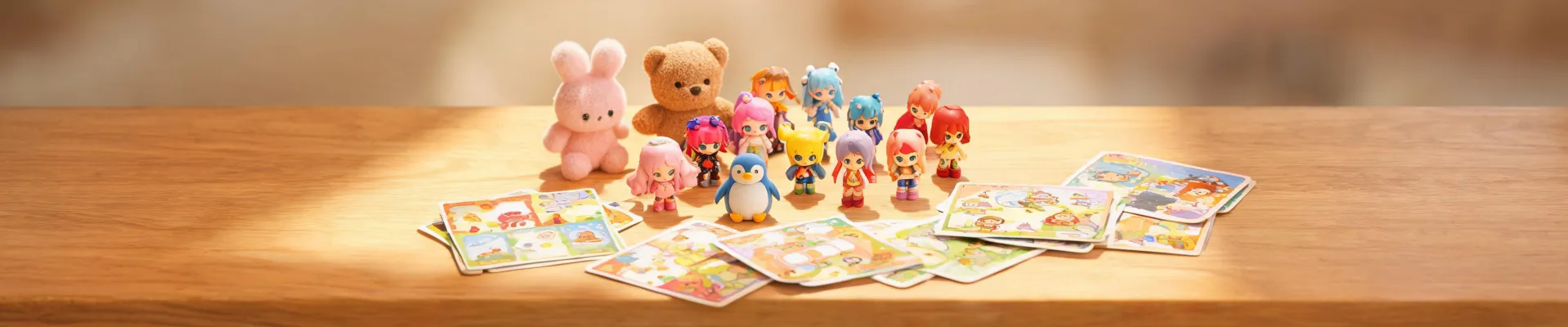
The Toy Story 30th anniversary Funko Pops are worth buying, but not for the reason you might think. If you're convinced that the '30th anniversary' badge guarantees a future grail or a limited-edition cornerstone, you're setting yourself up for disappointment and an overflowing shelf. The truth is, anniversary waves from Funko often consist of regular production figures with a special theme or packaging, and the collectible market treats them unevenly. Some pieces will climb in value, most won't, and the ones that do usually owe their strength to character popularity or exclusivity, not the anniversary date itself. In fact, the anniversary label is often more about marketing than rarity. So the real decision isn't 'should I buy this set,' but 'which figure in this set actually represents my connection to Toy Story?' Answer that question honestly, and you'll know exactly which boxes deserve your money. That's the first step toward a collection that actually feels like yours.
Anniversary Hype vs. Collector Sense
Think about how Funko typically handles milestone releases. The company might roll out a few variants with metallic paint, an alternate pose, or a chase piece, but those variants are still part of the main product line. They are not set apart as an elite investment tier. That means a 30th anniversary Woody or Buzz isn't intrinsically more valuable than a standard Pop from a few years ago; its market value depends on production count, retail exclusivity, and how badly the fandom wants that specific design. For every anniversary Pop that appreciates, there are dozens that sit on discount shelves. The anniversary label simply doesn't carry the scarcity magic that many buyers assume. Once you accept that, you can stop treating the whole wave as a once-in-a-lifetime opportunity and start evaluating each piece on its own merits.
Now, this doesn't mean you should skip the anniversary line altogether. It means you need a different approach. Instead of asking whether the set is a good investment, ask whether any of these designs trigger a genuine memory—the pull-string Woody, the first time Buzz froze, the 'You've Got a Friend in Me' montage. A collection built on those moments satisfies in a way that no price chart can. That's the mindset shift that turns a random pile of vinyl into a meaningful tribute to a film that has stayed with you for three decades.
The Funko Machine Behind the Hype
So what are you actually buying into when you pick up a Toy Story 30th anniversary Pop? You're buying from Funko, a company that describes itself as a "hub for pop culture" with the world's largest selection of pop culture licenses. According to its official about page, Funko produces collectibles, apparel, plush, action figures, digital collectibles, and more across countless franchises. That context matters more than you'd expect. It tells you that the Toy Story anniversary set is one small drop in a massive, ongoing stream of products. Funko isn't asking you to make a once-in-a-lifetime purchase; it's asking you to participate in a never-ending cycle of collecting. So the urgency you feel is manufactured by nostalgia, not by the market.
But the brand's scale goes even further. Funko's official storefront isn't just Pop! figures; it also fuels other brands like Loungefly, Mondo, and Digital Pop! via the Droppp platform. That means the same entertainment universe is available as backpacks, posters, music collectibles, and digital items. The company even runs a Fan Rewards program that encourages you to keep coming back for more with points and exclusive experiences. What does that tell you about the Toy Story 30th anniversary wave? It tells you that this anniversary set is just one lane in a multi-lane highway. The company's business model depends on continuous releases, not on making any single anniversary line scarce or precious. So if you treat the 30th anniversary Pops as a rare, finite chance to own a piece of history, you're reading the situation backwards. The scarcity you sense isn't built into the product; it's a feeling created by your own attachment to the film.
Three Filters for a Smarter Buy
With that broader understanding, here are three filters to apply before you spend anything on a Toy Story 30th anniversary Pop. First, nostalgia: does this specific character or pose bring back a real moment from the movie, or is it just part of the lineup? Second, scarcity expectation: check whether the figure is a store exclusive, a limited run, or a simple mainline release—but don't assume 'anniversary' equals 'limited.' Third, budget and space: set a ceiling for how many Pops you're willing to display and what you're willing to spend. If a piece fails on any of these filters, it's probably a no. The point of the exercise isn't to restrict you; it's to make sure that every purchase you make actually earns its place in your collection.
The scarcity filter deserves a closer look, because it's where most buyers get tripped up. Funko's own ecosystem keeps the pipeline full—new exclusives appear across anime, gaming, movies, and TV every week, and the Fan Rewards program (which the official site highlights with 'same perks you love, now with a smoother design') exists precisely to keep collectors engaged long-term. If the company were really trying to create one-time, must-own anniversary investments, it wouldn't be building loyalty programs and expanding into all those product categories. The message is that collecting is an ongoing hobby, not a one-shot deal. So when you see a Toy Story 30th anniversary Pop without a clear exclusive or limited-edition marker, expect it to be part of the regular stock. That's not a bad thing; it just means your purchase decision should hinge on personal meaning, not on a fantasy of future resale value.
Now ask yourself: which of these three filters is hardest for you? If you're a completionist, the budget and space filter will hurt the most. If you're an investor at heart, the scarcity filter might lead you to chase exclusives that aren't really in this wave. If you're all about nostalgia, you might overbuy because every character reminds you of a scene. Naming your weakness is the first step to controlling it. Before you open your wallet, decide which filter you'll trust the most—and make it your tiebreaker when two figures look equally tempting.
The Core Memory Rule
Applying the nostalgia filter, adopt the 'core memory rule.' Go through the Toy Story 30th anniversary lineup and look at each character. Does it connect to a specific moment from the film that you actually lived through? Maybe it's Woody's look from the first movie with his pull-string, or Buzz in his original spacesuit frozen in that 'To infinity and beyond' pose, or even Jessie from the second film if you grew up with the later adventures. If the figure triggers a genuine memory—like the scene where Andy plays with his toys on his bed—that's a candidate. If it just looks cool or shiny, that's not enough. The rule is simple: if you can't name the memory, you can't justify the purchase. You're not building a museum of every Toy Story character; you're building a personal timeline of the moments that mattered to you.
Why does this rule matter? Because the real value of a Toy Story anniversary Pop is emotional, not monetary. A mass-produced vinyl figure will never be a rare artifact; even the hardest-to-find chase pieces from this wave are unlikely to rewrite your retirement plan. But when you place that figure on your shelf, what you see is not plastic—it's the memory of watching the movie with your family, or the joy of playing with the toys as a kid. That feeling doesn't depreciate. An investor might call this a bad asset because it won't appreciate in resale, but a collector calls it a good purchase because it returns happiness every time you look at it. The misconception that '30th anniversary' means 'future collectible' is exactly what should be corrected: these items are emotional anchors first, and the price tag is only a ticket to that memory. So when you're torn between two figures, always choose the one that makes you feel more, not the one you think might sell for more.
When the Full Set Makes Sense (and When It Doesn't)
When does it make sense to buy the entire Toy Story 30th anniversary set instead of cherry-picking? Only if you hit all three conditions: you have the shelf space to display ten or more figures without clutter, your budget comfortably covers the full wave without sacrificing other priorities, and you personally identify as a completionist who enjoys the narrative of having the whole family together. If you miss any of those, the full set will turn into a storage problem or a silent guilt trip. For most people, the better move is to pick the one or two figures that pass the core memory test and leave the rest. You get the Anniversary experience without the clutter, and you can even hunt for a store-exclusive version of your favorite character later if that specific design calls to you.
Let's be specific about the scenarios. If you're a parent buying for a child who loves Toy Story, the full set might make a great birthday gift if that child already has a dedicated shelf. If you're a long-time collector with a room full of Pops, adding the complete anniversary wave may fit your existing setup. But if you're a casual fan who just wants a small nod to the film, or if you're short on space, you'll be happier with a single well-chosen figure. The boundary is clear: the full set is for those with room, budget, and completionist genes; a curated pick is for everyone else.
Here's the final verdict. The Toy Story 30th anniversary Funko Pops are absolutely worth buying—but only the ones that strike a chord with your personal history. If you're a devoted Toy Story fan, pick the one figure that instantly brings back a childhood scene, and make that your centerpiece. If you're a collector who loves the complete family aesthetic and has the wall space to do it justice, the full set can be a beautiful tribute. But if you're buying because the word 'anniversary' makes you feel like you're missing out, or because you're hoping for a future payday, skip it. The mass-produced nature of these figures means they won't become the rare grails you imagine, and the space they occupy will remind you of that missed expectation. Buy for the memory, not the sticker. That's the only way this wave delivers real value.

Jane Smith
I’m Jane Smith, a senior content writer with over 15 years of experience in the packaging and printing industry. I specialize in writing about the latest trends, technologies, and best practices in packaging design, sustainability, and printing techniques. My goal is to help businesses understand complex printing processes and design solutions that enhance both product packaging and brand visibility.